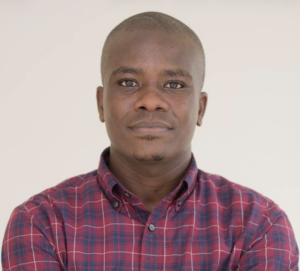
Chris Nkwatsibwe, Possible Now Stitching Fellow (Uganda)
When Jenny Hodgson of the GFCF first introduced the idea of a “garden mind” during an informal conversation we had about the future of civil society sometime back in April, I am not sure it fully registered with me. I found the metaphor intriguing, but I don't think I quite appreciated its deeper meaning. Several months into my Possible Now Stitching Fellowship, however, I find myself returning to that conversation, and the idea is beginning to make much more sense.
I am now drawn to the idea of Possible Now as a “wild garden of possibilities”, where different experiments are taking root, sometimes quietly, imperfectly and without anyone directing them. Perhaps the future we are searching for is already emerging in fragments, in places and ways we do not always recognize. The challenge, then, may be less about designing something entirely new and more about recognizing what is already growing, connecting what has remained separate, and nurturing the conditions for these possibilities to flourish.
One question I have been exploring concerns these very conditions, particularly the economic foundations of civic freedom. Having spent much of my professional life in civil society in Uganda, I have often wondered why we have become so good at mobilizing resources created and controlled elsewhere yet invest comparatively little imagination in what we might collectively build and own. In my recent paper, Can Civil Society Be Free at the End of the Value Chain?: Money, Moral Power and the Unfreedom of Civil Society, I explore this tension.
The conversations and questions that followed have now pushed me towards a more practical question – what might the alternatives look like? These questions have taken me back to an unfinished experiment in Uganda – the Nafasi Cooperative Society Ltd, which was conceived in 2014. Its founding idea was simple: modest savings, pooled and invested collectively by civil society staff, could create opportunities beyond what individuals could achieve alone. It never reached the scale imagined, but perhaps there are lessons in that unfinished experiment worth revisiting.
That experience is informing the idea of a Civic Wealth Commons, through which civic actors and communities might collectively build and govern economic assets that sustain their independence. I am equally curious about whether philanthropy could help nurture such institutions without permanently controlling them. Could some of philanthropy’s most transformative work involve helping people build institutions that eventually make them less dependent on philanthropy itself?
These questions are difficult but critical. And this is what excites me most about the Possible Now Summit – the prospect of encountering people whose work may look nothing like mine, but whose questions might help me see mine differently. Perhaps someone reimagining care, democracy or community ownership has already discovered something essential about the institutions we need.
I hope the Summit in Kathmandu brings me into conversation with these people: those whose experiments might challenge my assumptions and help me see possibilities I have overlooked. I want to learn what others are building, what has struggled, and what we might attempt to create together.
Perhaps that is also what the “garden mind” is beginning to mean to me – recognizing that the future cannot simply be planned into existence, but that we can take greater responsibility for the conditions in which it might grow.