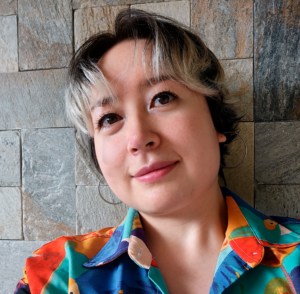
Daniela Cevallos, Fundación Ñeque / Possible Now Stitching Fellow (Ecuador)
Following Circles of Trust and Change
When I started my Possible Now Stitching Fellowship, I thought I was exploring trust as a condition for social change. Along the way, the question shifted.
In conversations with women leading community-based socio-environmental initiatives in Ecuador, trust rarely appeared as a fixed idea. People spoke about specific moments: when they decided to share something sensitive, when they chose to stay involved despite disappointment, when they realized someone had earned their confidence, or when they concluded the opposite.
What caught my attention was how often trust was tied to judgment. People seemed to be engaged in a constant process of assessing relationships. Who follows through? Who listens? Who shows up when things get difficult? Who can be relied upon, and under what circumstances?
As I followed these stories, I kept returning to three intertwined circles: trust in oneself, trust within a community, and trust between communities and external actors. I had initially treated them as separate areas of inquiry. The conversations resisted that separation. A change in one often affected the others.
One issue I continue to sit with concerns risk. In philanthropy, we often discuss the risks funders and organizations take when deciding whom to support. Much less is said about the risks communities take when deciding whom to trust.
Sharing knowledge, opening networks, making struggles and vulnerabilities visible, allowing outsiders into community processes: these are not neutral decisions. In contexts where civic space is shrinking and community organizing faces increasing pressure, they can carry lasting consequences. Communities know this. It shapes how they evaluate relationships.
This is one of the conversations I hope to bring to Kathmandu.
For me, Possible Now is partly an invitation to think about how possibilities emerge under difficult conditions. My fellowship left me wondering whether trust is one of the places where those possibilities first become visible. Not trust as consensus, certainty, or goodwill, but trust as the carefully considered decision to remain in relationship despite incomplete information and real risks.
I'm looking forward to conversations that take those questions seriously. Conversations about what makes relationships durable, what makes them worthy of trust, and how communities, movements, funders, and other organizations navigate those questions together. Because before new presents and futures become plans, strategies, or institutions, they begin as relationships.