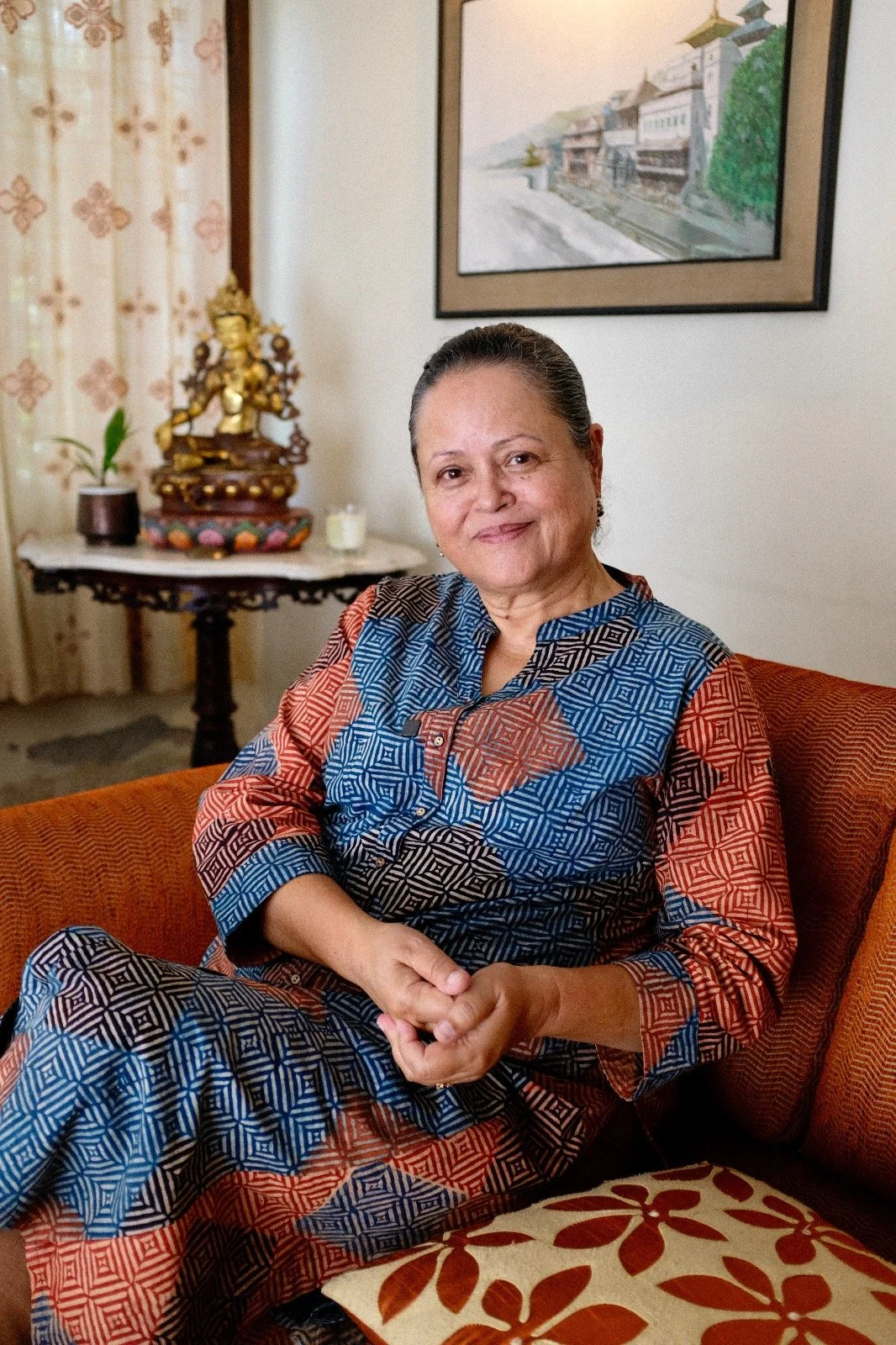
Rita Thapa, Inter-Generational Feminist Forum (Nepal)
During the early planning stages for the Possible Now Summit – post Nepal’s Gen-Z movement of 8 and 9 September 2025 – we agreed that even despite the disruptions caused by this, the Kathmandu venue could still hold! Now reeling from the recent catastrophic 26 August 2026 flooding, I feel even more convinced that now is the time for building international solidarity. The Summit will be held in Kathmandu: we CAN and we MUST!
Nepal is a country in perpetual transition(s) with breathtakingly diverse geography. It is a country rooted in its spiritual and cultural traditions, and its people(s) are finally learning to reclaim their dignity. Even after seventy years of foreign-aided development, Nepal is still labeled as “poor” and at best, “developing”! In terms of its political transitions since 1990, and its infrastructural advancement, this has been true. But to those with an open and discerning mind, we have tremendous richness to offer: I am sure all those who will attend the Summit will experience this in various ways – you will not be let down!
When Jenny Hodgson of the GFCF first spoke to me about the Summit and Possible Now, I mentioned to her that Possible Now – which, for me, has the mobilization of community resources at its very core – is already alive here in Nepal. I can see this in many ways, but I was particularly referencing the Anupam Abhiyan, a nationwide five-year-long feminist movement (2023 – 2027) run by the Inter-Generational Feminist Forum. Gathering momentum over the last four years, the Anupam Abhiyan now has more than 4,000 activist leaders all over Nepal. Following the dismal outcomes of the general elections of November 2022, this feminist movement focused on two main objectives:
Dignified and self-reliant development.
Women’s equitable and proportionate representation at all levels of the State structure.
With minimal outside funding, this voluntary movement has already made a turnaround in terms of development outcomes. It is now gaining grounds in advance of the upcoming elections, aiming for a transformational political shift, where women’s representation will be proportionate and equitable!
All of this to say: here in Nepal it is being made possible – NOW!